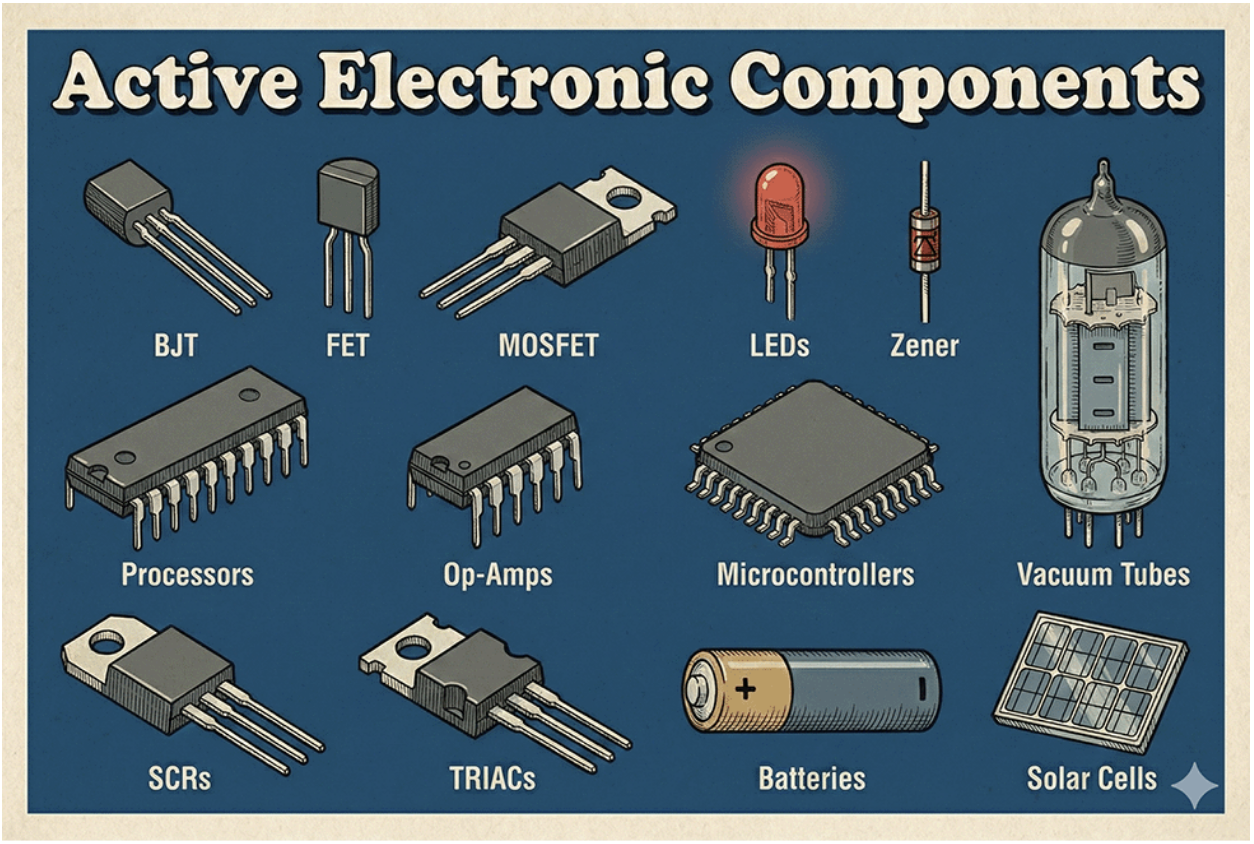
If you have ever wondered how active electronic components work, the answer starts with power and control.
Active electronic components use an external power source to amplify, switch, or regulate electrical signals. They do not just pass energy through a circuit. They actively shape it.
These components form the functional core of modern electronics. From microprocessors in computers to power regulators in industrial machinery, active devices control signal flow and create gain. They take a small input and produce a controlled output.
At Summit Electronics, we specialize in sourcing the active devices that keep industries operating. With over 2 million parts in stock and global access to supply chains, we support customers needing current, allocated, hard-to-find, obsolete electronics, and legacy components.
Our global distribution network allows us to serve as both the first and last purchasing agent for major manufacturers across aerospace, defense, robotics, energy, automotive, and many other MRO repair sectors.
What Are Active Electronic Components?
Active electronic components are devices that require an external voltage or current source to function. They control, amplify, or switch electrical energy inside a circuit.
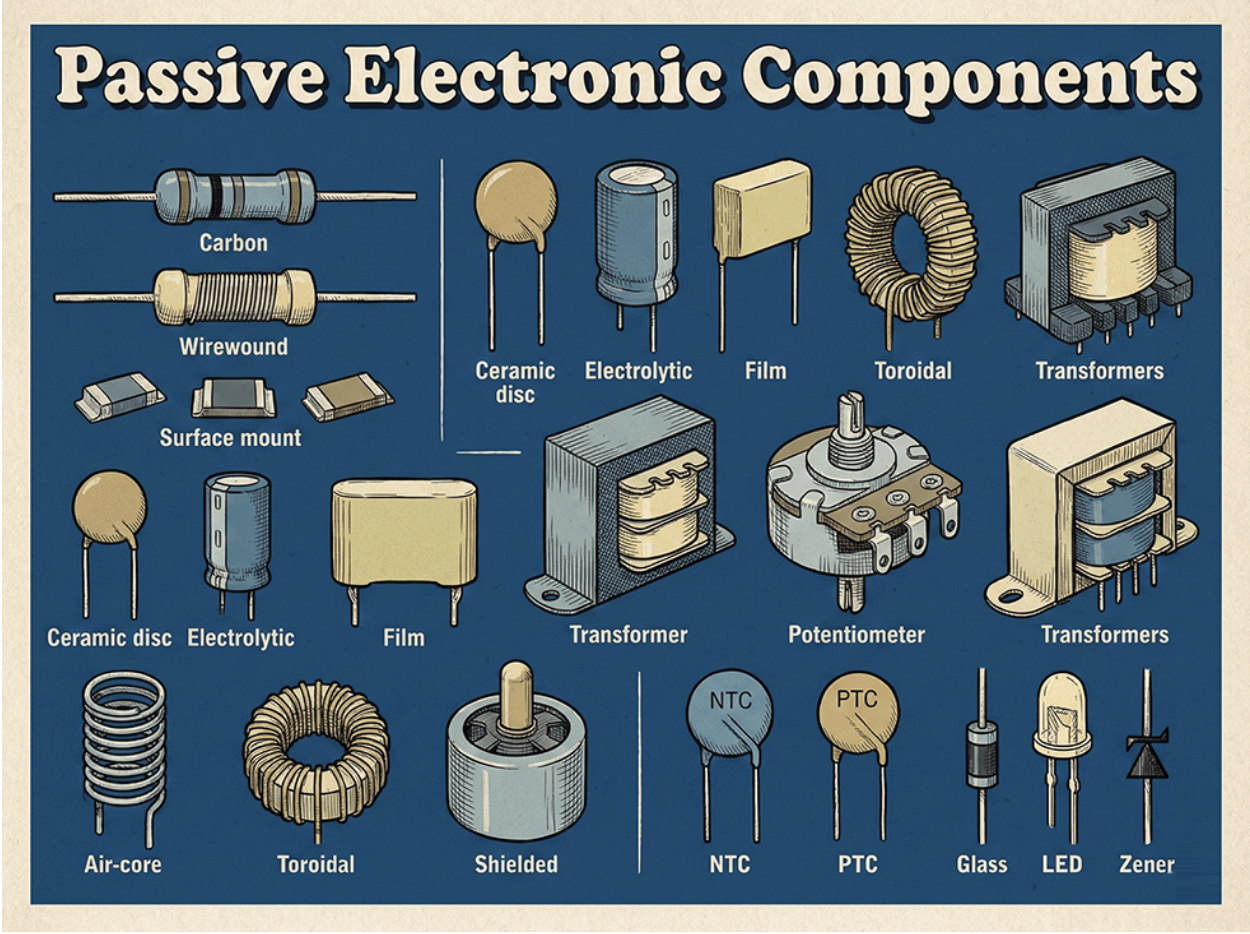
Unlike passive components such as resistors, capacitors, and inductors, active devices can produce gain. Gain means a small input signal can control a much larger output signal.
Key characteristics include:
- Dependence on an external power source
- Ability to amplify signals
- The capability to switch or regulate current
- Support for logical operations in digital systems
Without active components, modern electronics would not compute, transmit, or regulate power effectively.
The Core Types of Active Electronic Components
Transistors
Transistors are the foundation of modern electronics. They act as amplifiers or switches.
Common types include:
- Bipolar Junction Transistors
- MOSFETs
- Field Effect Transistors
A transistor uses a small input current or voltage to control a larger current flow. Billions of transistors exist inside a single microprocessor. According to Intel, advanced processors can contain over 50 billion transistors, highlighting their central role in digital systems.
Source: https://www.intel.com/content/www/us/en/newsroom/resources/press-kit-intel-4-process.html
Diodes
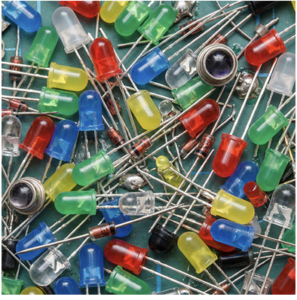 Diodes allow current to flow in one direction. They perform rectification and signal control.
Examples include:
- Light Emitting Diodes
- Zener diodes
- Photodiodes
Zener diodes regulate voltage. Photodiodes convert light into electrical signals. LEDs convert electrical energy into light and are widely used in displays and indicators.
Integrated Circuits
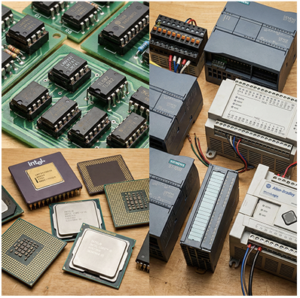 Integrated circuits combine many active components into a single chip. These chips perform complex tasks such as signal processing, computation, and memory storage.
Examples include:
- Operational amplifiers
- Microprocessors
- Logic controllers
The global semiconductor market exceeded 500 billion dollars in annual sales in recent years, according to the Semiconductor Industry Association. This reflects the global reliance on integrated circuits.
Thyristors
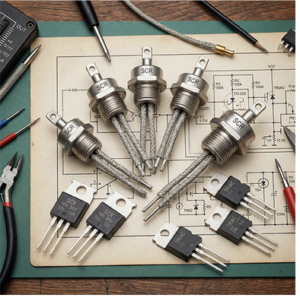 Thyristors control high-power systems. They are often used in motor drives and industrial power regulation.
Common examples include:
- Silicon Controlled Rectifiers
- Triacs
These devices remain off until triggered, then conduct current under controlled conditions.
How Active Electronic Components Work Inside a Circuit
Understanding how active electronic components work requires examining bias and control.
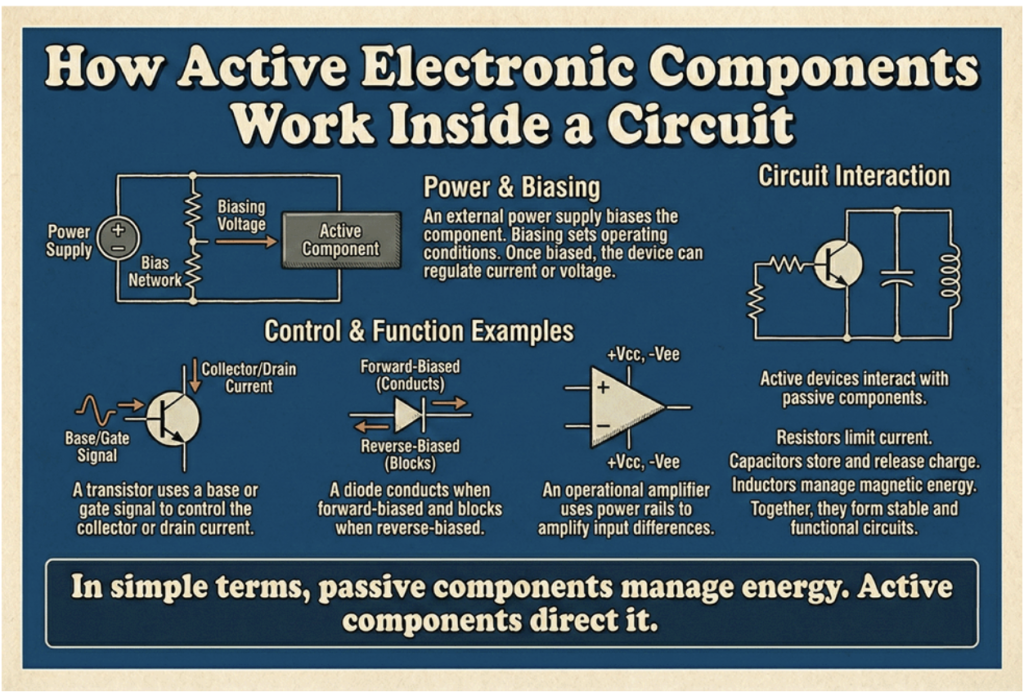
An external power supply biases the component. Biasing sets operating conditions. Once biased, the device can regulate current or voltage.
For example:
- A transistor uses a base or gate signal to control the collector or drain current.
- A diode conducts when forward-biased and blocks when reverse-biased.
- An operational amplifier uses power rails to amplify input differences.
Active devices interact with passive components. Resistors limit current. Capacitors store and release charge. Inductors manage magnetic energy. Together, they form stable and functional circuits.
In simple terms, passive components manage energy. Active components direct it.